



DORA
Build resilient financial operations with software escrow for DORA
Protect your institution against third-party ICT risks with Codekeeper's software escrow solutions, built to deliver compliance and continuity under DORA.
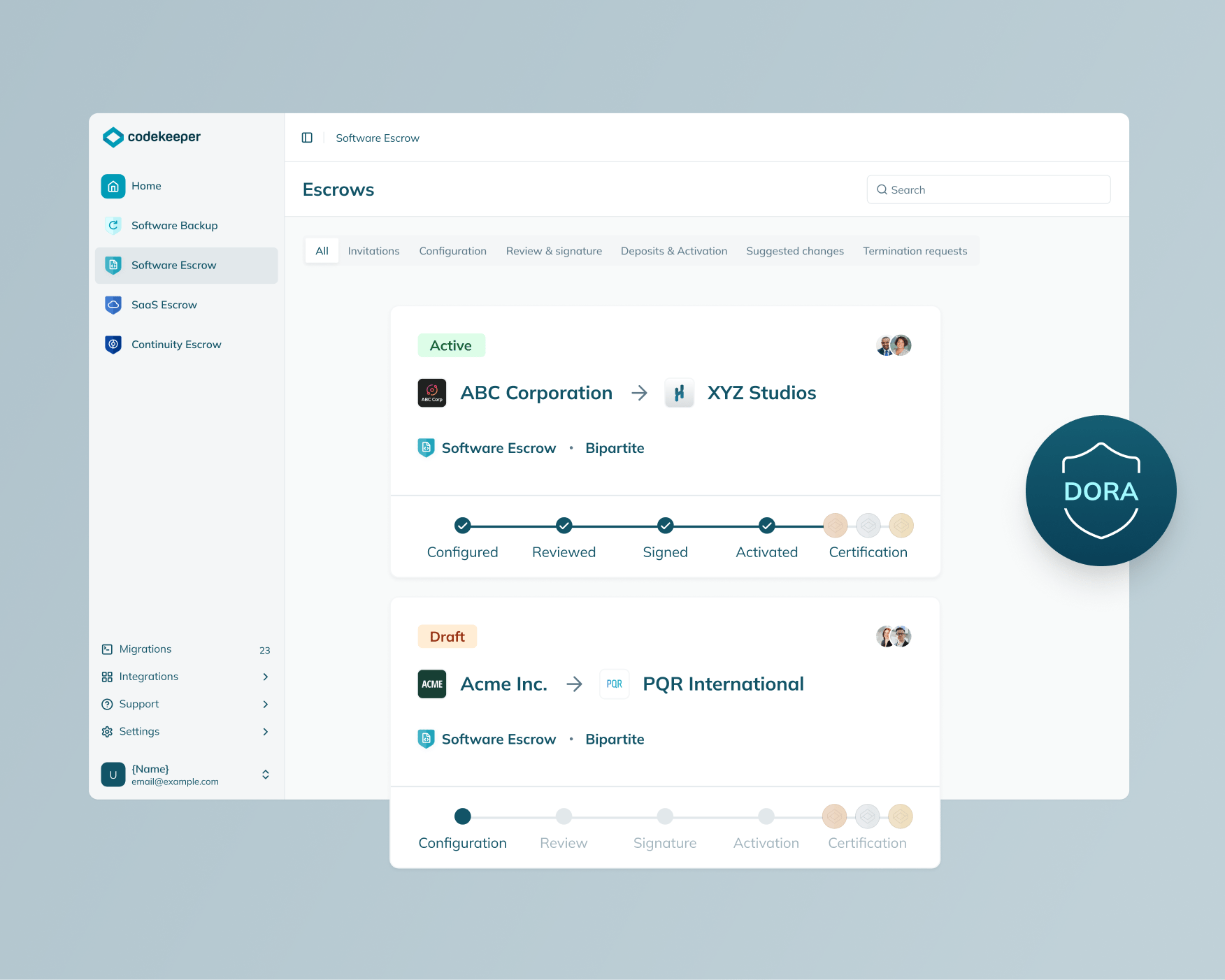
We see the challenges you face:
Tightening regulatory standards
Incoming compliance deadlines
Continuous reliance on third-party software
Difficulty navigating ICT risks
Supported by compliance experts who track evolving regulations and provide best practices, Codekeeper helps your institution stay resilient and audit-ready.

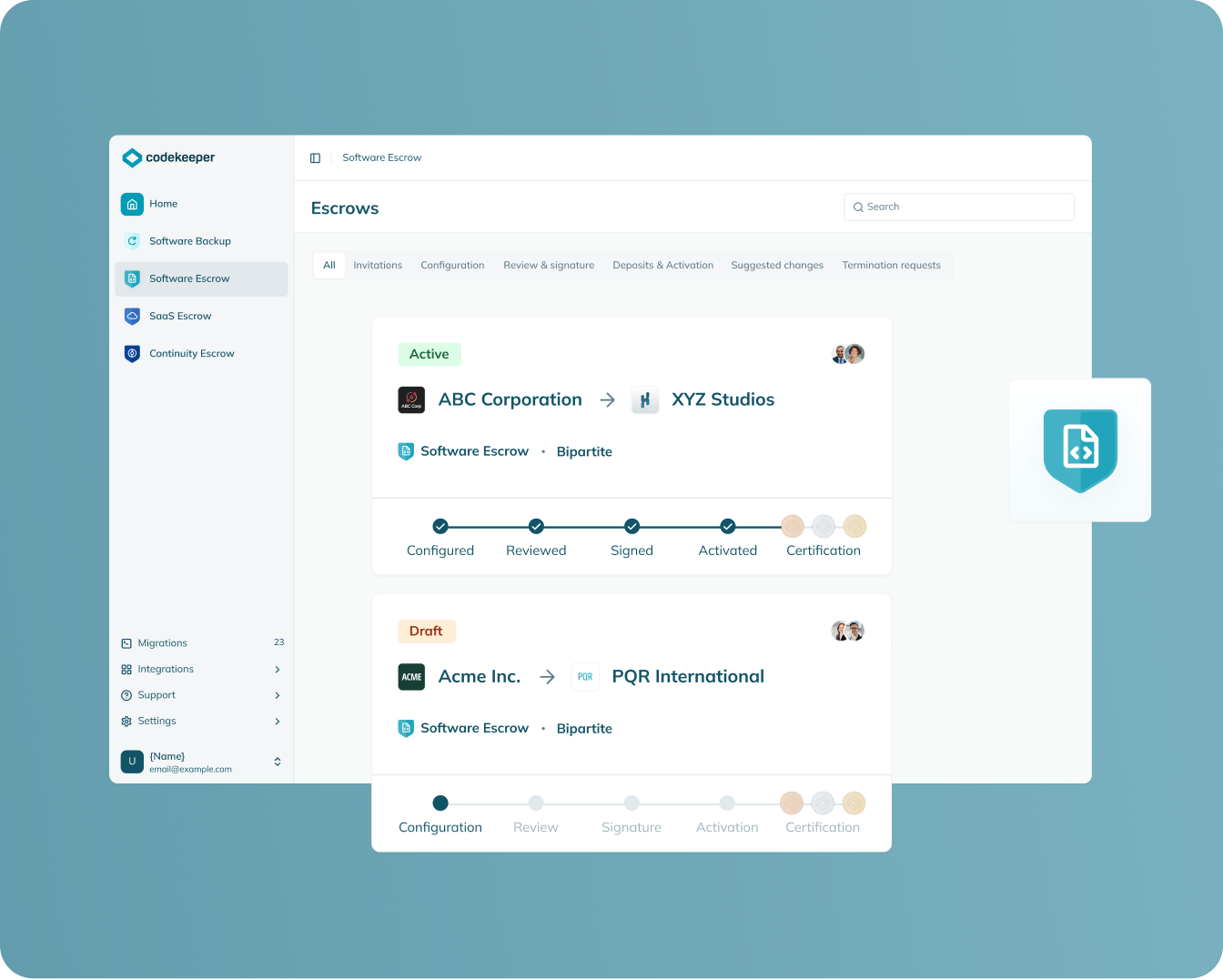
Software Escrow
Protection scope: On-premises software solutions
Keeps core on-premises applications available to support uninterrupted financial operations.
Guarantees continued access to essential software
Mitigates risk from vendor failures
Verified compliance records regulators can rely on
Learn more
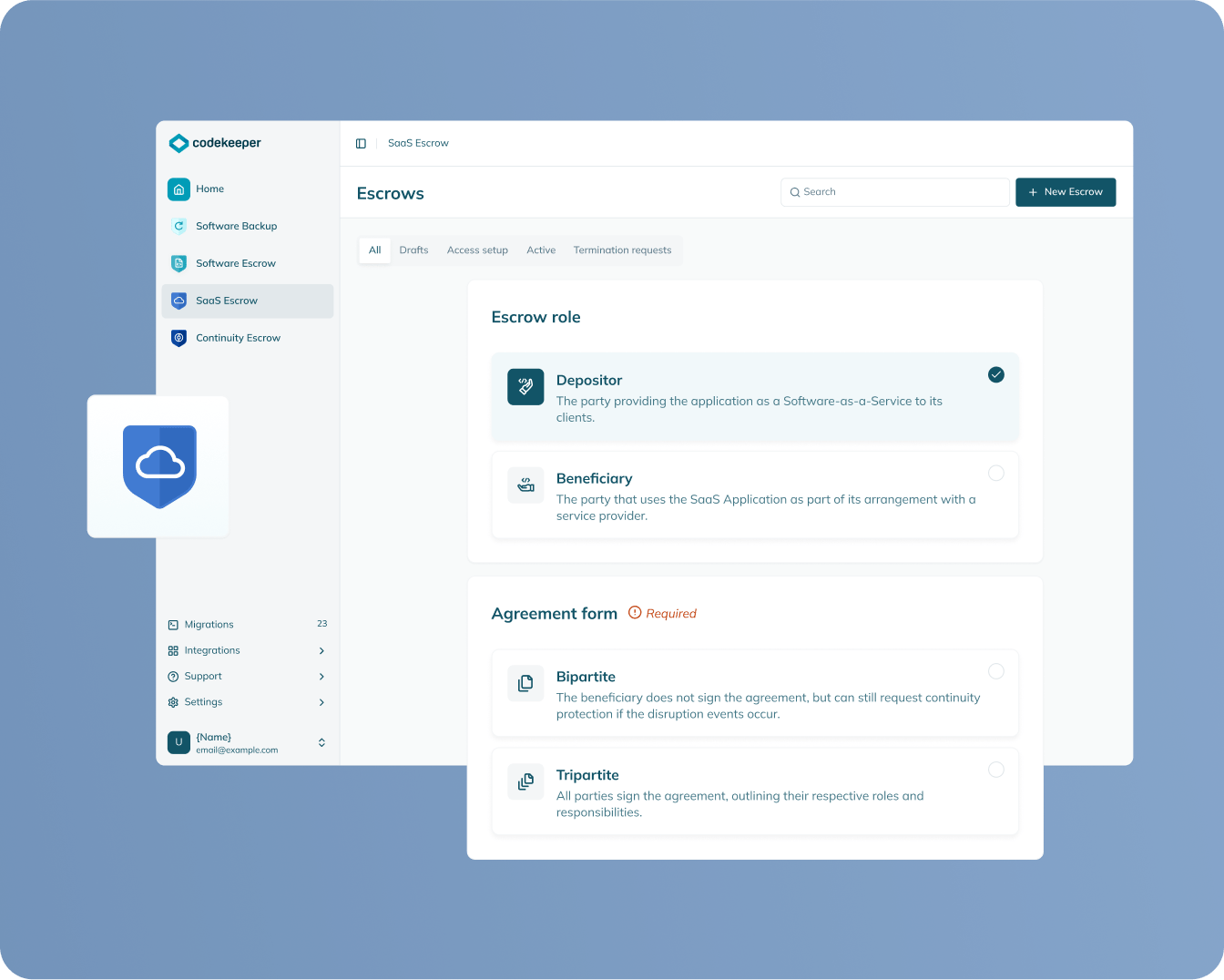
SAAS escrow
Protection scope: Cloud-based applications and solutions
Protects critical cloud platforms and data, ensuring availability even during service disruptions.
Secures cloud service dependencies
Provides recovery assurance
Addresses DORA’s risk management needs
Learn more
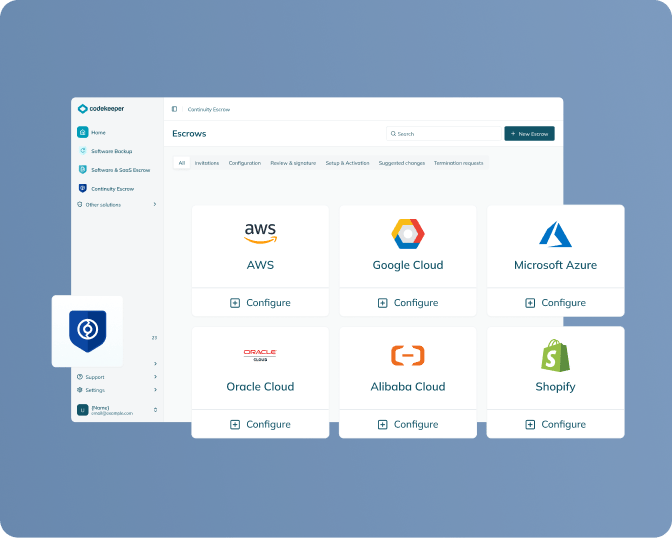
continuity escrow
Protection scope: Supporting services and infrastructure
Covers infrastructure and payment flows to keep institutions resilient through vendor disruption.
Maintains access to critical infrastructure
Prevents disruptions from vendor failures
Aligns with DORA’s continuity requirements
Learn more
Verification
Protection scope: All escrowed materials
Transforms escrow from passive storage into active assurance by testing deposits and proving they can be recovered when needed.
Verifies integrity of escrowed assets
Confirms operational recovery capabilities
Demonstrates audit readiness
Learn more








-

January 16, 2023
DORA was finalized by the EU, setting clear standards for ICT resilience in the financial sector. -

24 October 2024
Under DORA, the European Commission adopted the final Delegated and Implementing Acts, detailing requirements for ICT risk management, incident reporting, and third-party oversight. -

January 17, 2025
Full compliance is mandatory. All financial entities must demonstrate operational resilience and ICT risk management readiness. -

From 2025 onwards
Supervision and audits are increasing. Institutions must be able to prove resilience with testing, documentation, and third-party oversight, or risk facing financial penalties.
January 16, 2023
DORA was finalized by the EU, setting clear standards for ICT resilience in the financial sector.
24 October 2024
Under DORA, the European Commission adopted the final Delegated and Implementing Acts, detailing requirements for ICT risk management, incident reporting, and third-party oversight.
January 17, 2025
Full compliance is mandatory. All financial entities must demonstrate operational resilience and ICT risk management readiness.
From 2025 onwards
Supervision and audits are increasing. Institutions must be able to
prove resilience with testing, documentation, and third-party oversight, or risk facing financial penalties.
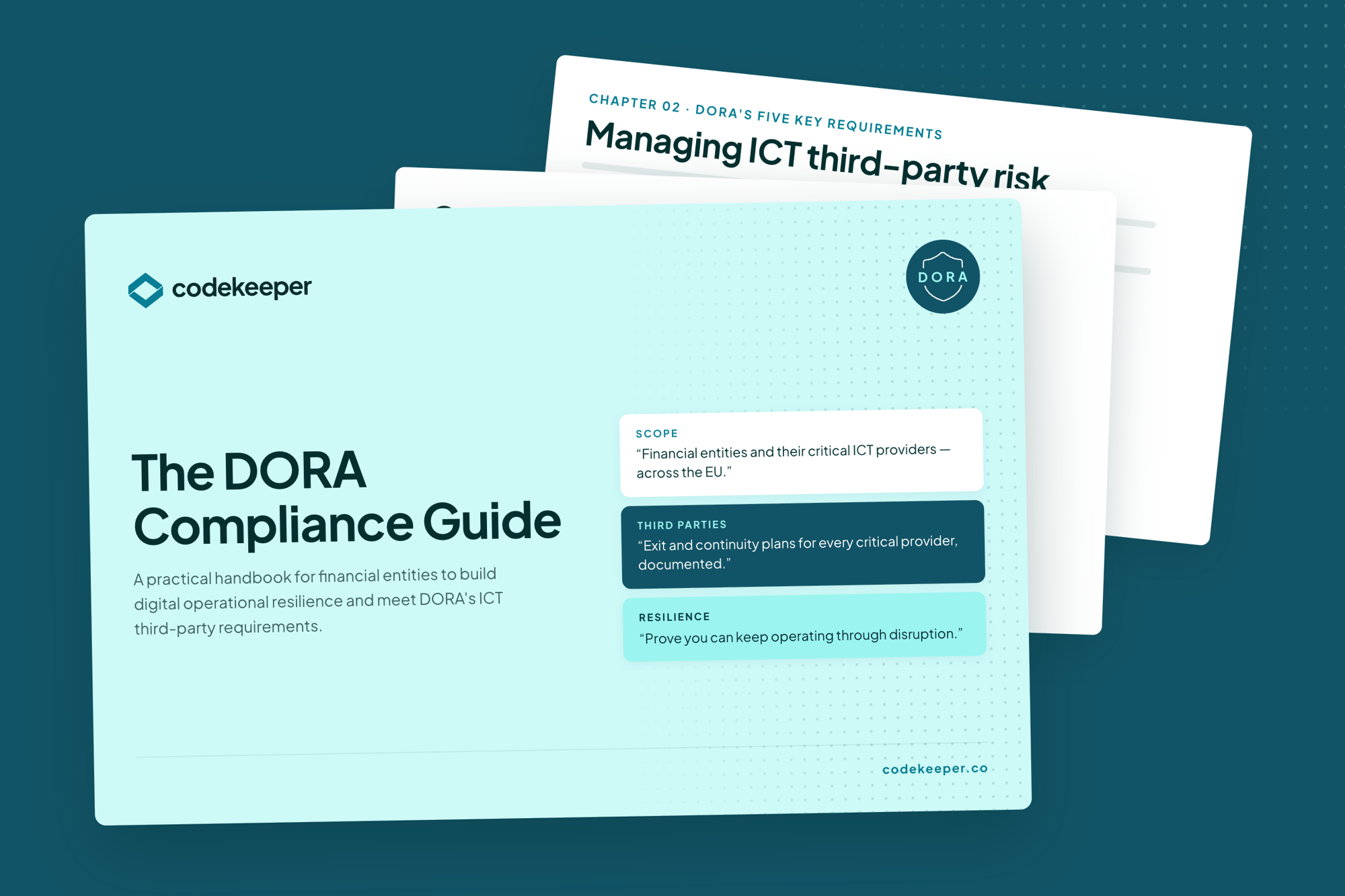
E-BOOK
Prepare for DORA: Get your guide
Our practical guide breaks down DORA compliance into clear steps. Learn how to avoid penalties, strengthen your ICT resilience, and meet EU regulatory expectations. Download it now to stay ahead of 2025 and beyond.
*E-book available only in English
Get your free DORA guide now

Get DORA compliant with confidence
DORA sets strict standards for resilience across ICT systems and vendors. Codekeeper ensures you meet these requirements with tested escrow solutions and audit-proof records.
Get a tailored DORA compliance assessment
Receive clear, actionable steps aligned with regulatory standards
Access audit-ready documentation
Build resilience that protects both operations and reputation