Meet EU AI Act requirements with cutting-edge AI escrow solutions
The EU AI Act now puts your business on the hook for AI infrastructure you don't control. If your vendor fails and you can't prove your stack was documented and protected, you face fines up to €35 million, regulatory scrutiny, and months of operational disruption.
The EU AI Act: What you need to know
What is the EU AI Act?
Who needs to comply with the EU AI Act?
Key EU AI Act requirements
Where AI escrow fits in
Let us guide you to EU AI Act compliance
Codekeeper’s complete solutions for EU AI Act compliance
Protection scope: AI vendor dependency and stack continuity
Protection scope: On-premises software solutions
Protection scope: Cloud-based software and applications
Protection scope: Supporting infrastructure and services
Protection scope: All escrowed materials
Get EU AI Act ready in 4 steps
Book your EU AI Act assessment call
We'll identify which of your AI systems and vendor relationships fall under the Act's scope.
Choose your protection level
Select from AI Escrow, Software Escrow, SaaS Escrow, Continuity Escrow, or Verification based on your AI architecture.
We handle the setup
Our team manages legal agreements, vendor onboarding, and deposit automation, getting you live in 24 hours.
Receive your certificates
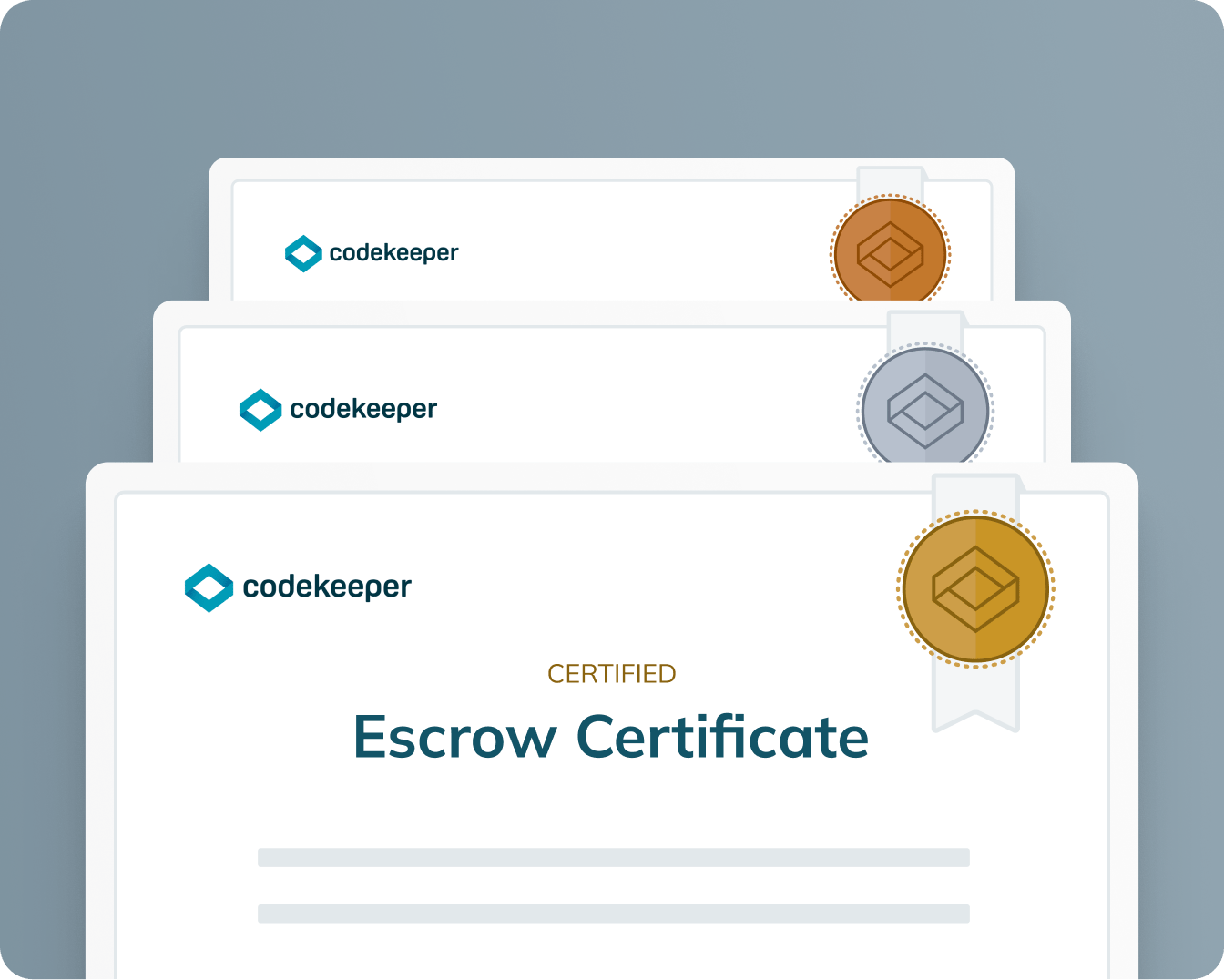
Get Software Resilience Certificates as proof that your AI stack is protected and recoverable, ready for EU AI Act audits.
Codekeeper takes the complexity out of compliance
The EU AI Act rollout: What's hit and what's coming
-
February 2, 2025
Prohibited AI practices banned and AI literacy obligations in force across the EUAll businesses deploying AI professionally must ensure staff are sufficiently trained -
August 2, 2025
GPAI model obligations active — providers of models like GPT and Gemini face full regulatory scrutinyNational competent authorities designated across Member States, enforcement infrastructure in place -
August 2, 2026
Article 50 transparency obligations kick in for chatbots, deepfakes, and AI-generated contentGPAI provider fines under Article 101 become enforceable — up to €15 million or 3% of global turnover -
December 2, 2027
Full high-risk Annex III obligations apply to standalone AI systems, following the Digital Omnibus postponementDeployers must have documented risk management systems, technical files, and vendor governance ready for audit
February 2, 2025
August 2, 2025
August 2, 2026
December 2, 2027
What EU AI Act non-compliance will cost you
Understand, prepare, comply: Your guide to EU AI Act compliance
How you can benefit from EU AI Act compliance
Keep your AI operations running
Turn compliance into a deal-winner
Build client confidence
Get EU AI Act ready on your own terms
Good questions to ask first.
What is the EU AI Act?
The EU AI Act (Regulation (EU) 2024/1689) is the world's first comprehensive legal framework for artificial intelligence. It takes a risk-based approach, sorting AI systems into four tiers and imposing escalating obligations as risk increases.
Who must comply with the EU AI Act?
Any business that develops, deploys, imports, or distributes AI systems in the EU falls under the Act. This includes businesses that use third-party AI professionally, not just the companies that build it.
Why is AI Escrow relevant to EU AI Act compliance?
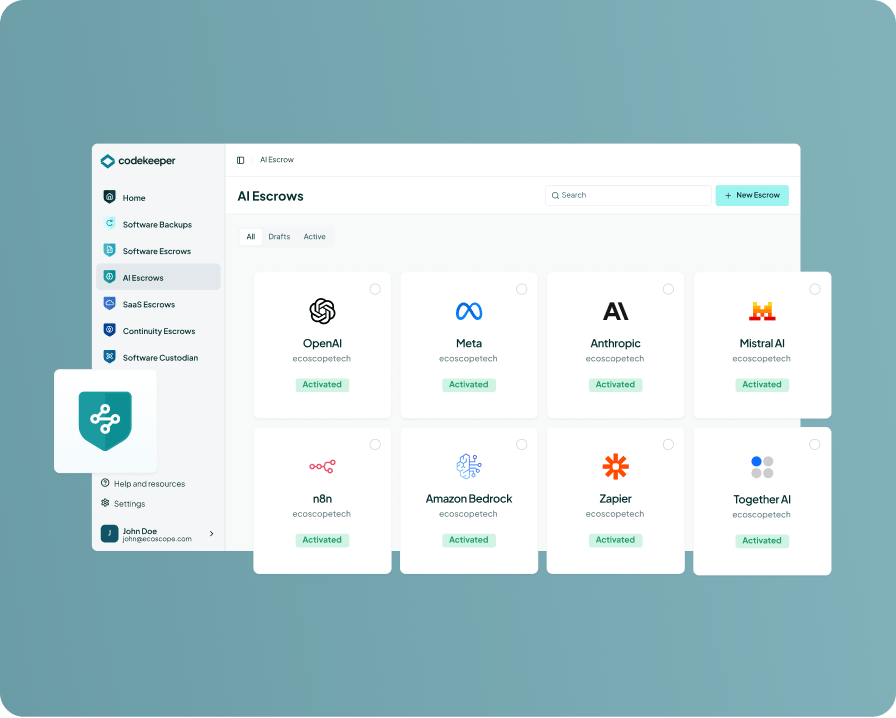
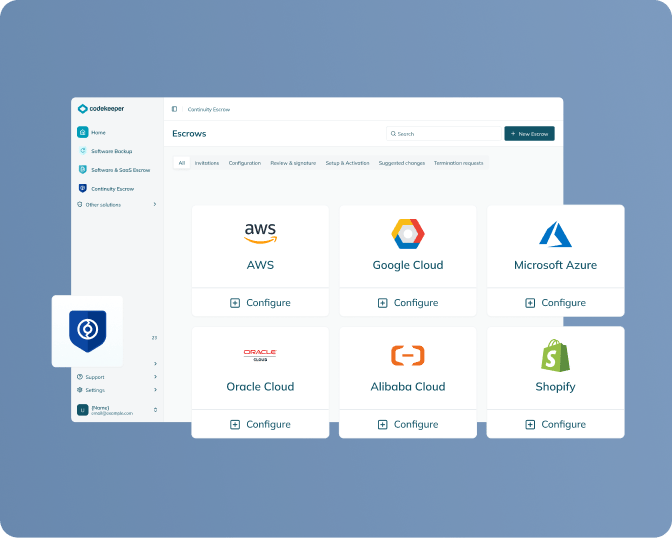
The Act requires deployers to document, govern, and prove recovery of the AI systems they depend on. AI Escrow backs up your full AI stack daily, provides the technical documentation the Act demands, and gives you legal coverage over AI vendor relationships.
When does the EU AI Act apply?
Parts of the Act are already in force. AI literacy and prohibited practice obligations apply since February 2025. GPAI model obligations have been active since August 2025. Full high-risk obligations for standalone AI systems apply from December 2027.
Does the EU AI Act apply to companies outside the EU?
Yes. The Act applies to any business whose AI output is used in the EU, regardless of where the company is based. A US or UK company with EU customers deploying AI professionally falls within scope.
What did the Digital Omnibus change?
The Digital Omnibus, provisionally agreed on May 7, 2026, postponed full high-risk Annex III obligations from August 2026 to December 2027. Core obligations including GPAI rules, prohibited practices, and the penalty structure remain unchanged.
What is Article 25 role-shifting and why does it matter?
Under Article 25, substantially modifying a third-party AI system can make your organization the legal provider, inheriting full compliance obligations including technical documentation and conformity assessment. Organizations that customize AI tools heavily need to assess their exposure.