










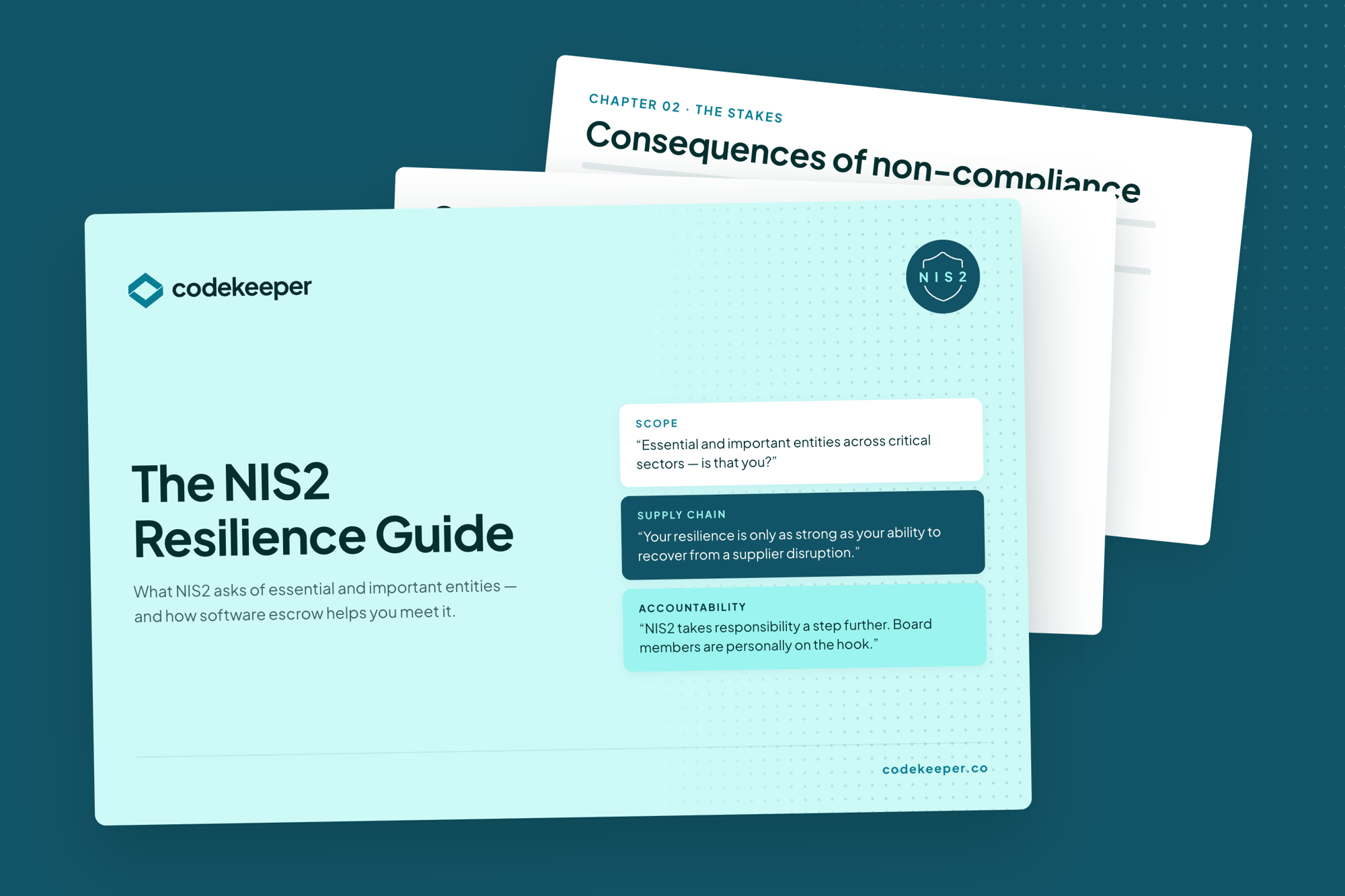
Achieve NIS2 compliance with bulletproof software resilience
When cyber attackers breach your critical infrastructure, the damage can spread instantly. Your essential services face potential shutdown, public safety risks, and severe regulatory consequences that could devastate your operations.
The NIS2 directive: What you need to know
What is NIS2?
Who needs to comply with the NIS2 directive?
Key NIS2 requirements
The software escrow — NIS2 connection
Let us help you achieve NIS2 compliance
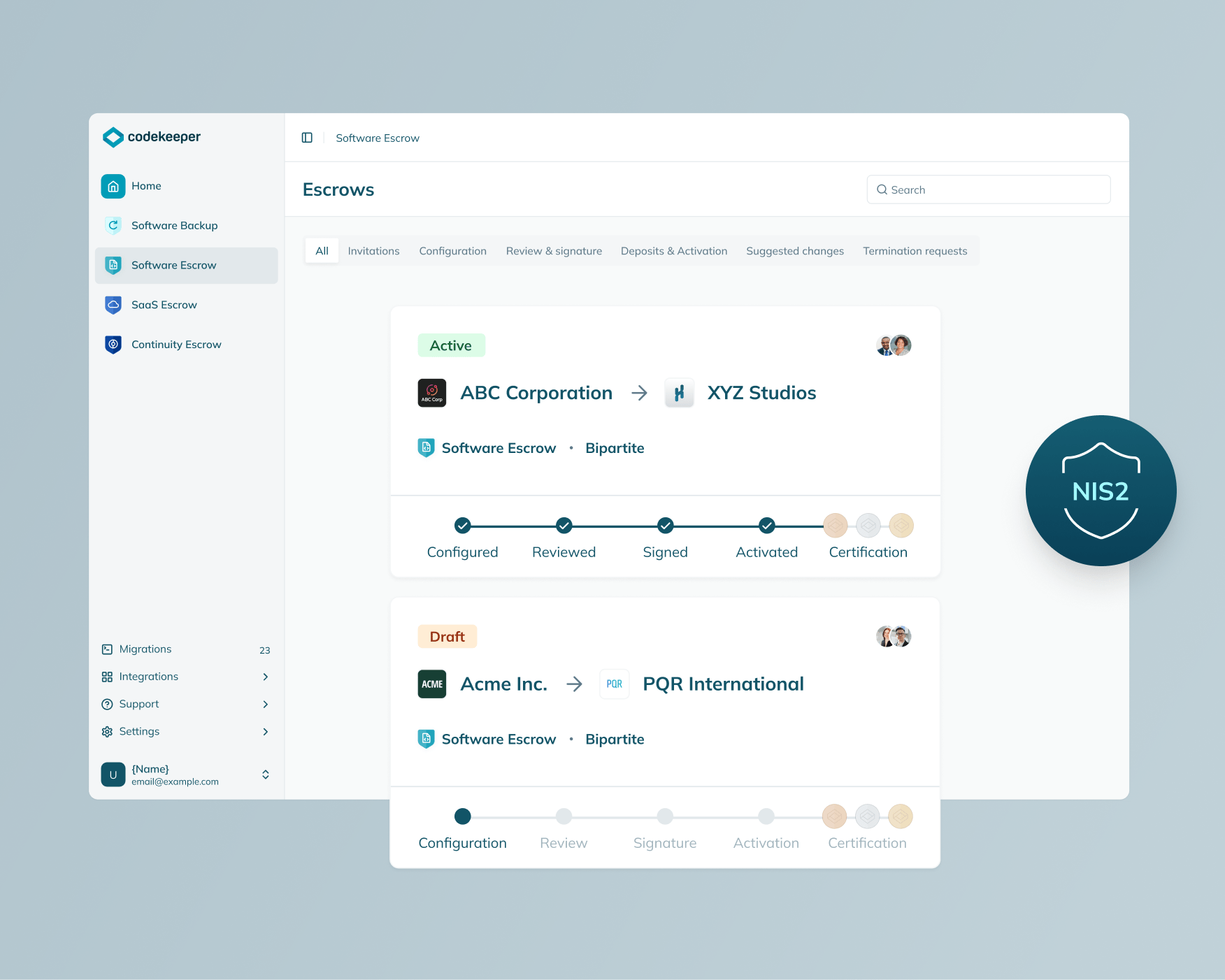
Codekeeper's complete solutions for NIS2 requirements
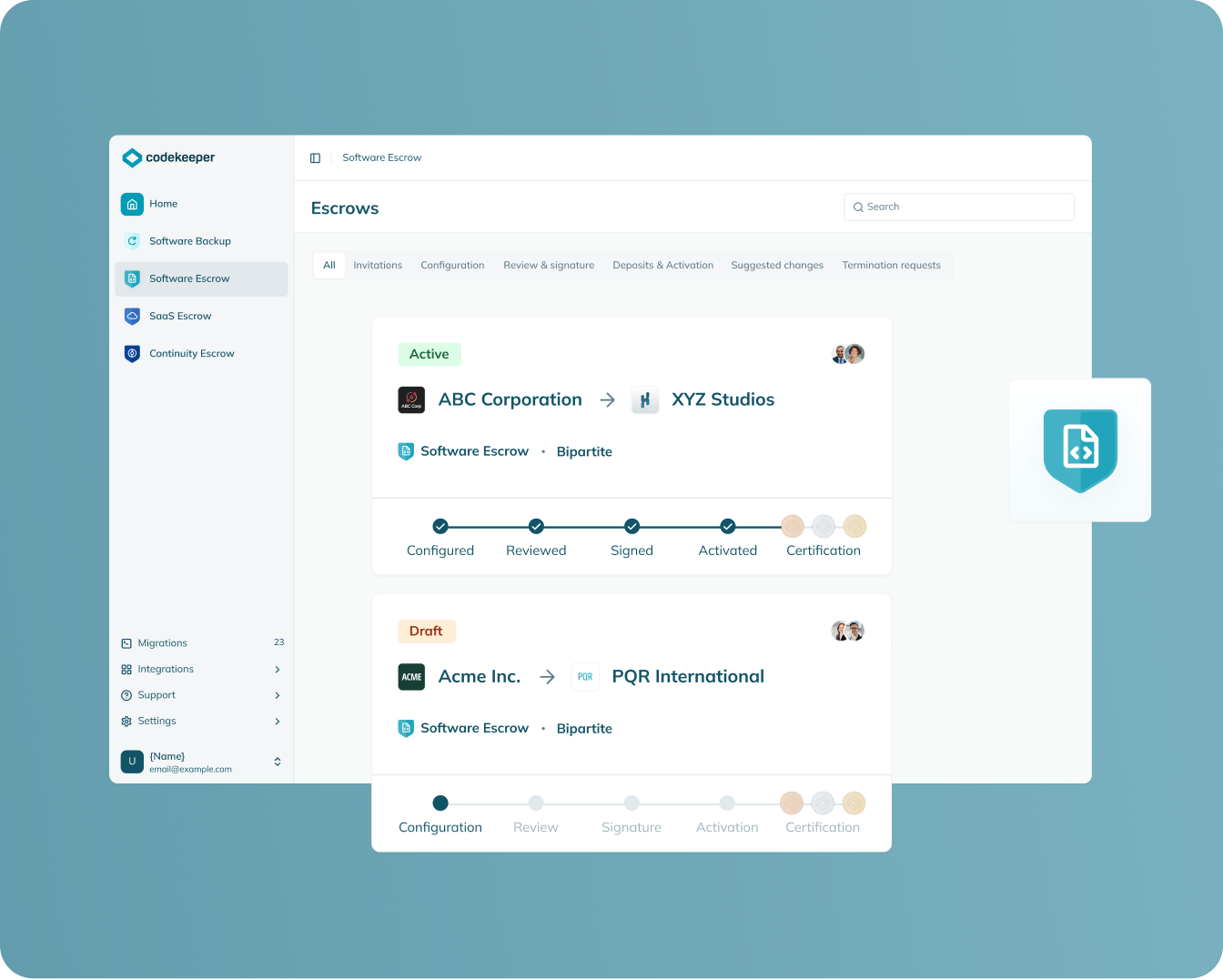
Protection scope: Traditionally installed software
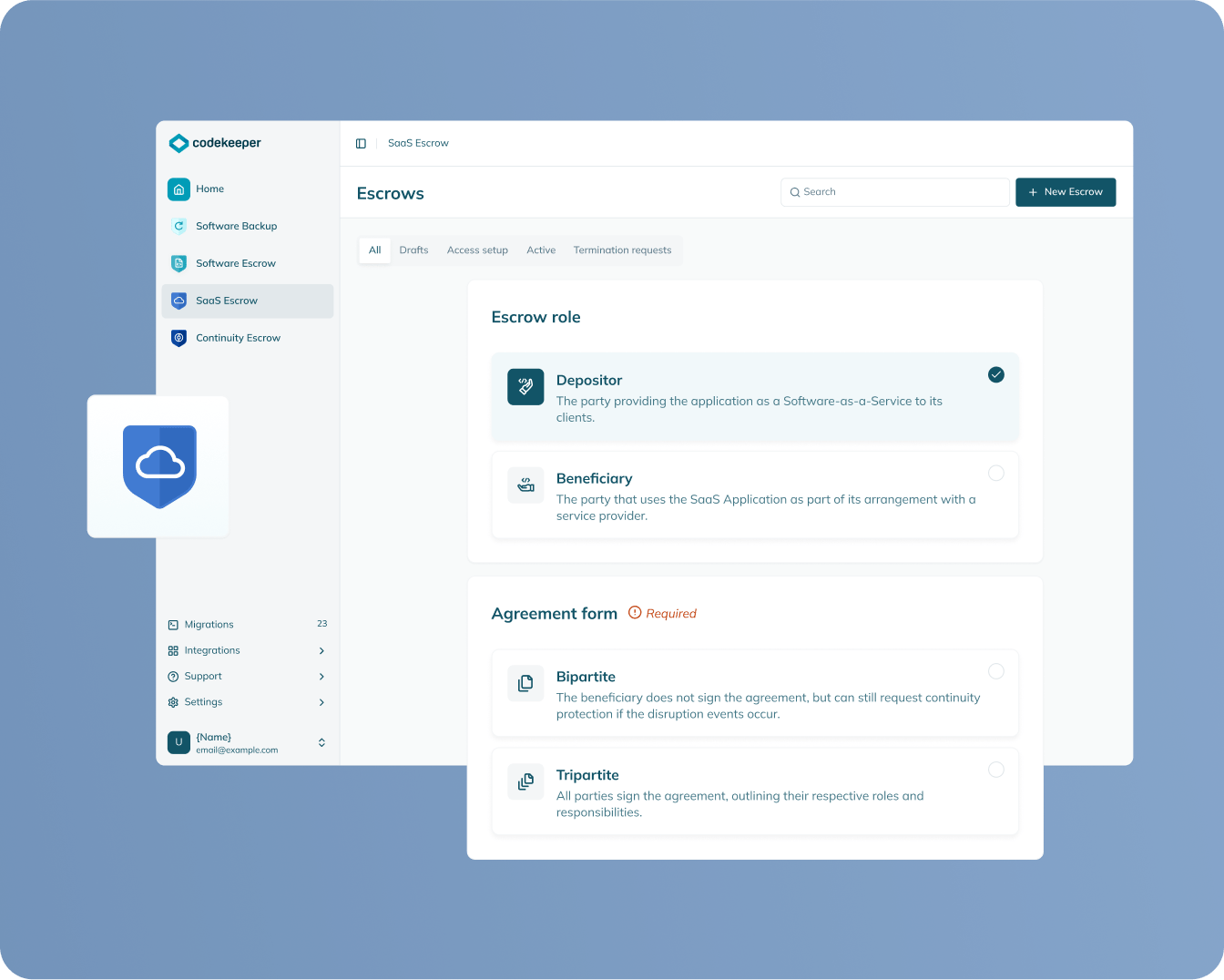
Protection scope: Cloud-based applications
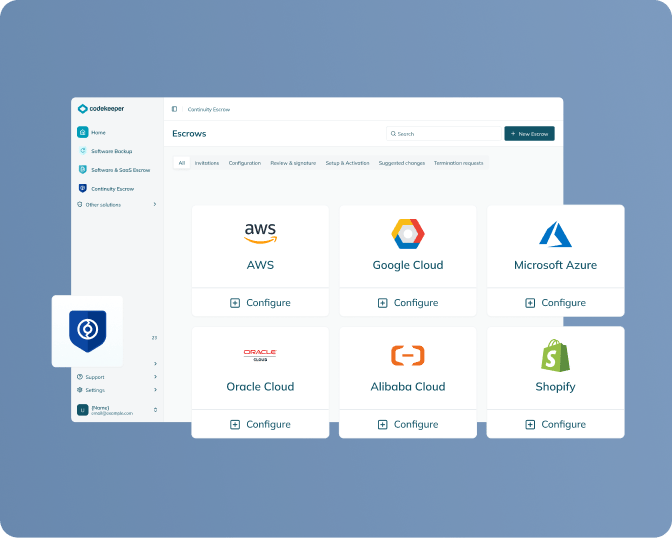
Protection scope: Supporting infrastructure and services
Protection scope: Software and SaaS applications
Build NIS2 compliance in 4 simple steps
Book a free demo
We'll evaluate which essential service applications create cybersecurity risks under NIS2's expanded coverage requirements.
Set up secure asset deposits
Your critical suppliers upload their source code, security patches, and technical specs into our escrow vaults.
Our escrow experts review your escrowed materials
We check your assets for vulnerabilities and confirm they can restore services during cyber incidents.
Get your Software Resilience Certificate
Receive verified proof that you can rebuild essential software infrastructures even when your suppliers fail.
Codekeeper takes the complexity out of compliance
NIS2 enforcement timeline
-
October 17, 2024
Member state transposition deadline — NIS2 should be incorporated into national laws -
January 17, 2025
Peer review methodologies established by the NIS Cooperation Group (made up of representatives of Member States, the European Commission, and ENISA) -
April 17, 2025
Entity registration lists due from member states to the European Commission -
October 17, 2027
First effectiveness review potentially introducing new cybersecurity requirements
October 17, 2024
January 17, 2025
April 17, 2025
October 17, 2027
The cost of ignoring NIS2 requirements
Assess, plan, implement: Your guide to NIS2 compliance
How you benefit from NIS2 compliance
Protect executive leadership
Strengthen vendor partnerships
Build operational resilience
Protect your critical services before penalties escalate
Good questions to ask first.
Is NIS2 mandatory?
Yes, NIS2 is mandatory for all “essential” or “important” EU entities in sectors like energy, transport, banking, and healthcare.
How does NIS2 build on the original NIS directive?
NIS2 broadens the scope of the original directive, expands the range of entities covered, strengthens security requirements, enhances supply chain security, and pushes for stricter incident reporting laws.
How will NIS2's regulations be monitored and enforced?
Member States are responsible for implementing and enforcing NIS2. This may involve establishing national competent authorities to oversee compliance and impose sanctions for non-compliance.
When does NIS2 take effect in the Netherlands?
NIS2 will be implemented in the Netherlands as the Cybersecurity Act (Cyberbeveiligingswet) and will take effect in early 2026. Many organizations will be directly or indirectly affected by this legislation, either through their own compliance obligations or requirements from clients and partners.
How does NIS2 relate to other EU cybersecurity policies?
NIS2 focuses on operational cybersecurity for critical service providers, while the Cyber Resilience Act (CRA) ensures the digital products they use are secure by design. Together with regulations, like GDPR and DORA, they create a comprehensive EU cybersecurity framework that covers services, products, data protection, and financial resilience.
Which basic measures does the NCSC recommend?
The National Cyber Security Centre (NCSC) recommends basic measures such as effective access control, secure configuration, network security, malware protection, and patch management.
What's the difference between essential and important entities under NIS2?
Essential entities (typically 250+ employees, €50M+ turnover) in highly critical sectors face proactive supervision and higher penalties (€10M or 2% of global revenue). Important entities (50-250 employees, €10M+ turnover) are subject to reactive supervision and lower penalties (€7M or 1.4% of global revenue).