Achieve Operational Excellence with proven software resilience
Without clear, verifiable continuity evidence, organizations risk falling behind on operational standards.
OpEx: What you need to know
What is OpEx?
Who needs to comply with OpEx?
Key OpEx requirements
How software escrow bridges the gap to OpEx readiness
Your partner in achieving operational maturity
Solutions that support your OpEx objectives
Protection scope: On-premises software
Protection scope: Cloud-based applications
Protection scope: Supporting services & infrastructure
Protection scope: All escrowed materials
Build OpEx resilience in 4 simple steps
Book an OpEx assessment call
Identify which systems, applications, and operational processes are essential to your continuity framework.
Choose your protection level
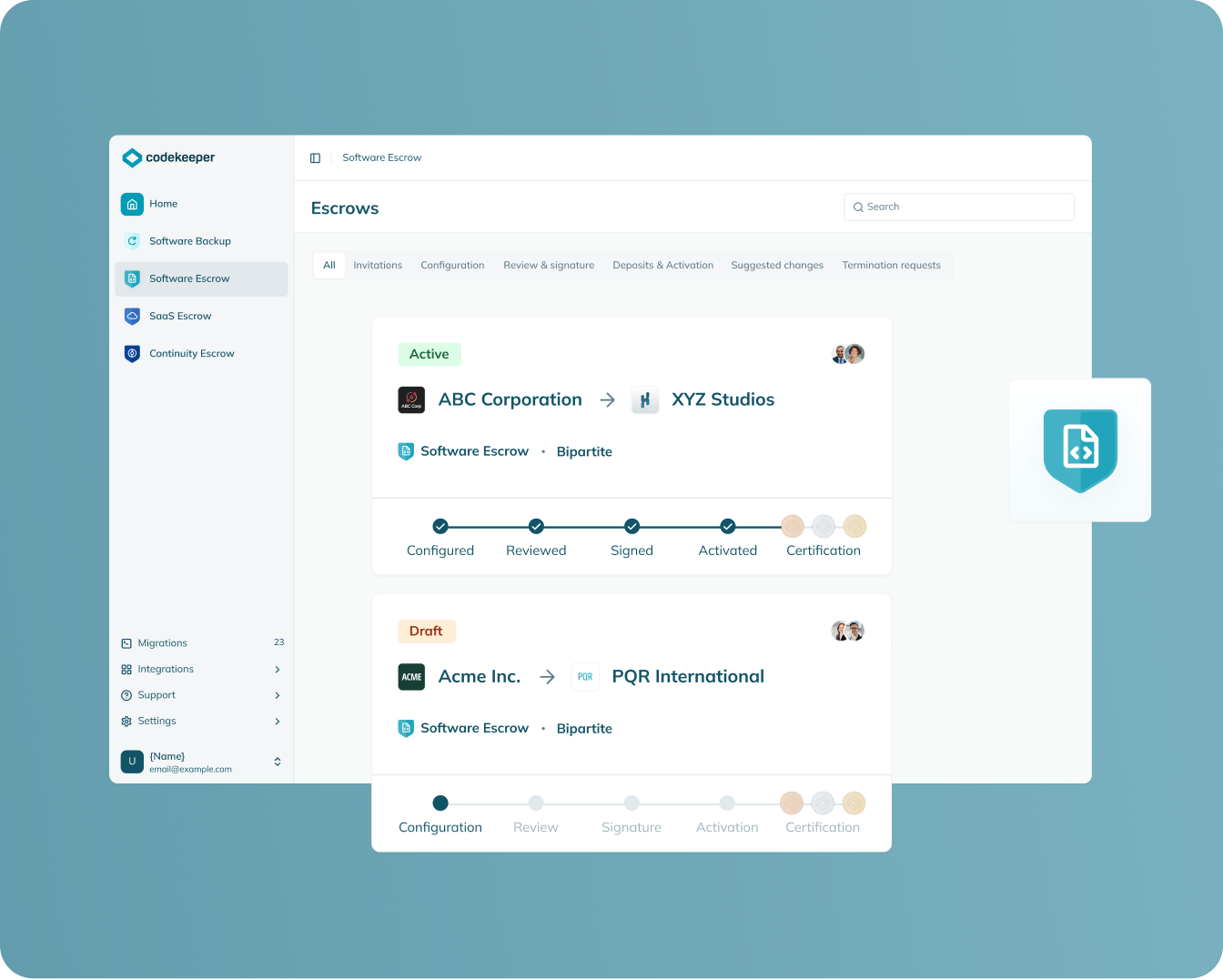
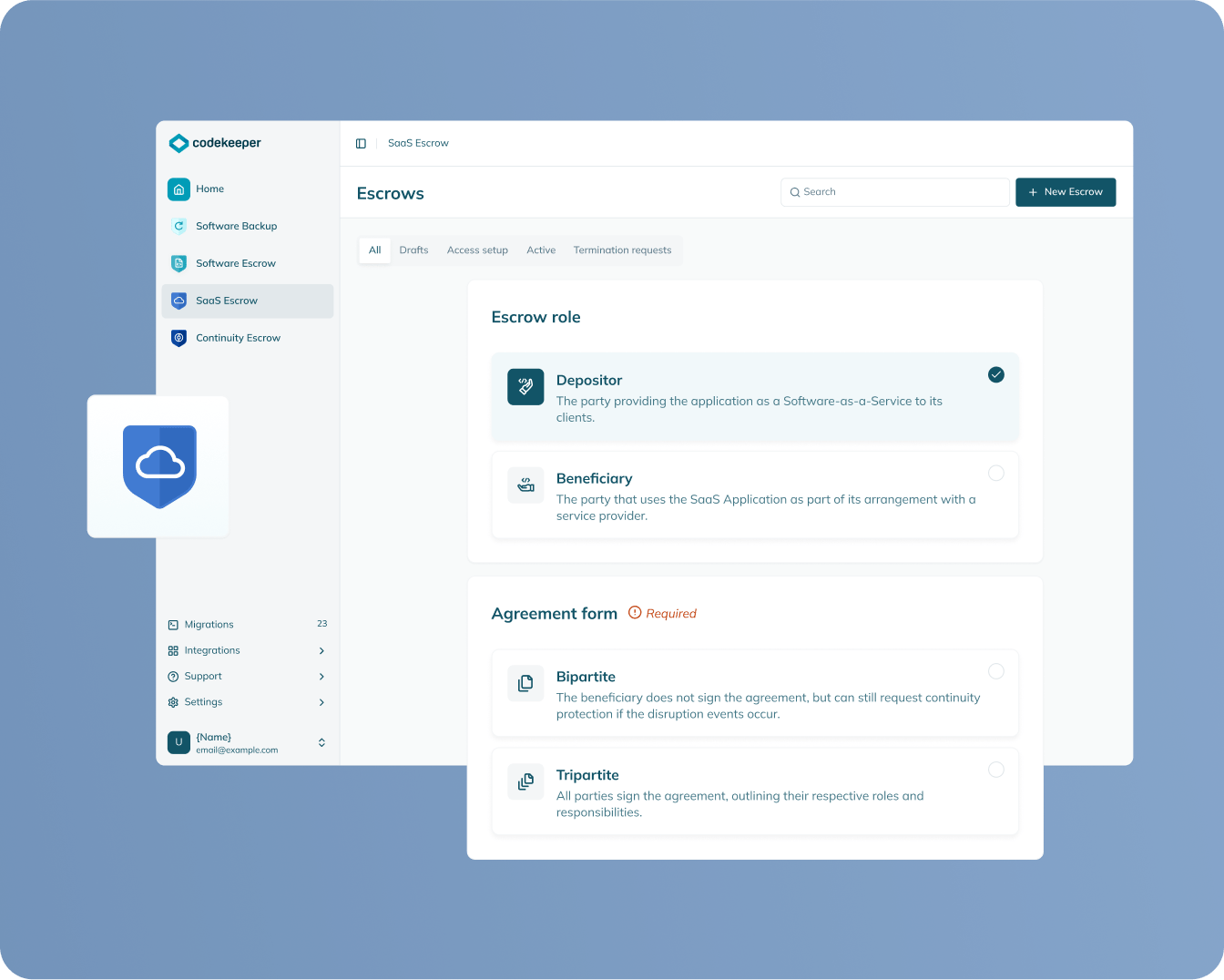
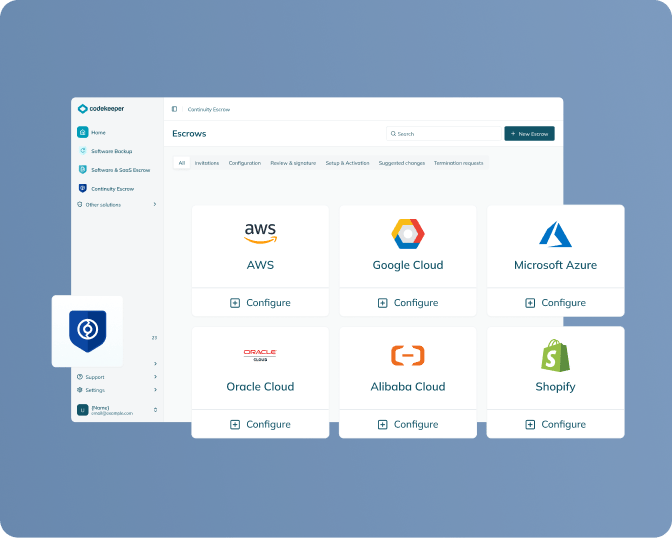
Select the right escrow option: Software, SaaS, Continuity Escrow, or add Verification, that best supports your OpEx alignment goals.
We manage the setup and ongoing processes
Our specialists manage onboarding, legal agreements, and deposit automation — no effort required from your team.
Receive your operational resilience documentation
Get verified continuity evidence that supports OpEx-aligned audits, assessments, and internal governance reviews.
Build operational confidence
How OpEx practices evolved
-
1980s – 2000s: Foundations of OpEx
Lean, Six Sigma, and TPS establish process discipline, standard work, and quality control. -
2005 – 2015: The cultural era
The Shingo Model shifts OpEx toward principle-driven behaviour, organisational alignment, and leadership maturity. -
2015 – 2020: Digital transformation
Industry 4.0 integrates automation, IoT, and predictive analytics into operational systems. -
2021 – 2025: OpEx 4.0
AI-assisted improvement and resilience-first operating models reshape modern operational expectations.
1980s – 2000s: Foundations of OpEx
2005 – 2015: The cultural era
2015 – 2020: Digital transformation
2021 – 2025: OpEx 4.0
Risks of falling short of OpEx expectations
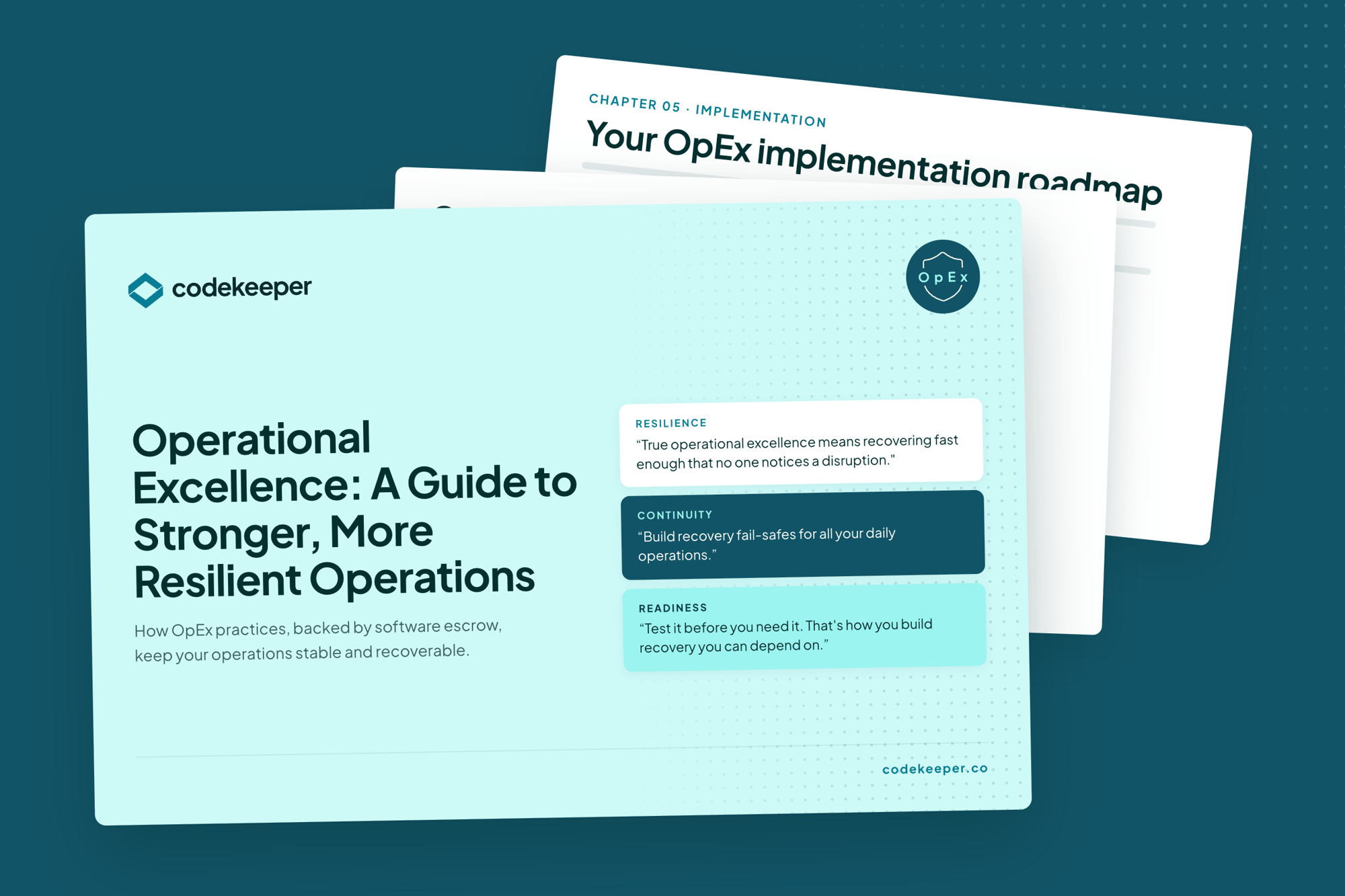
Strengthen your operational maturity: Download the OpEx Guide
How OpEx alignment benefits your organization
Audit-ready assurance
Strengthened customer trust
Improved risk posture
Advance your operational resilience
Good questions to ask first.
What is Operational Excellence (OpEx)?
Operational Excellence is a structured approach that focuses on consistent performance, reliable processes, and measurable operational control across an organization.
Is OpEx a regulatory requirement?
No. OpEx is not a formal regulation, but it is widely used as a benchmark during audits, supplier assessments, and internal governance reviews.
Who should follow OpEx standards?
Organizations that rely on high uptime, quality-sensitive workflows, or repeatable operational processes — including manufacturing, logistics, healthcare, finance, and technology sectors.
What are the core principles of OpEx?
OpEx draws from frameworks such as Lean, Six Sigma, TPS, and the Shingo Model to drive consistency, eliminate waste, improve process reliability, and strengthen continuity.
Why is software escrow relevant to OpEx?
Software escrow ensures that essential software and operational systems remain accessible and recoverable, supporting OpEx expectations around continuity, control, and documentation.
How does OpEx differ from business continuity or ISO 22301?
OpEx focuses on daily process consistency and operational discipline, while business continuity and ISO 22301 focus on structured planning for disruptions. They work together but serve different purposes.
Can Codekeeper support OpEx alignment?
Yes. Codekeeper provides software escrow, continuity, and verification services that help organizations demonstrate stable operations, recoverability, and documented governance.
What happens if an organization does not meet OpEx expectations?
Teams may face audit findings, operational inconsistencies, supplier assessment gaps, or reduced confidence from customers and stakeholders.