









Secure FFIEC compliance with Codekeeper escrow
The FFIEC deadline has passed — and regulators are watching. Without a proven continuity plan, your institution risks audits, penalties, and operational chaos if a vendor fails. Now’s the time to act.
The FFIEC: What you need to know
What is the FFIEC?
Who needs to comply with the FFIEC?
Key FFIEC requirements
Where software escrow fits in with FFIEC
Let us help you meet FFIEC compliance
Codekeeper’s solutions for FFIEC compliance
Protection scope: On-premises software
Protection scope: Cloud-based and SaaS apps
Protection scope: SaaS & vendor-dependent services
Protection scope: All escrowed assets
Get FFIEC compliant in 4 simple steps
Schedule your compliance call
We'll identify the systems that need FFIEC protection.
Choose your protection level
Basic escrow or full verification — we'll help you pick the right fit.
We do the heavy lifting
From vendor onboarding to legal agreements — handled for you.
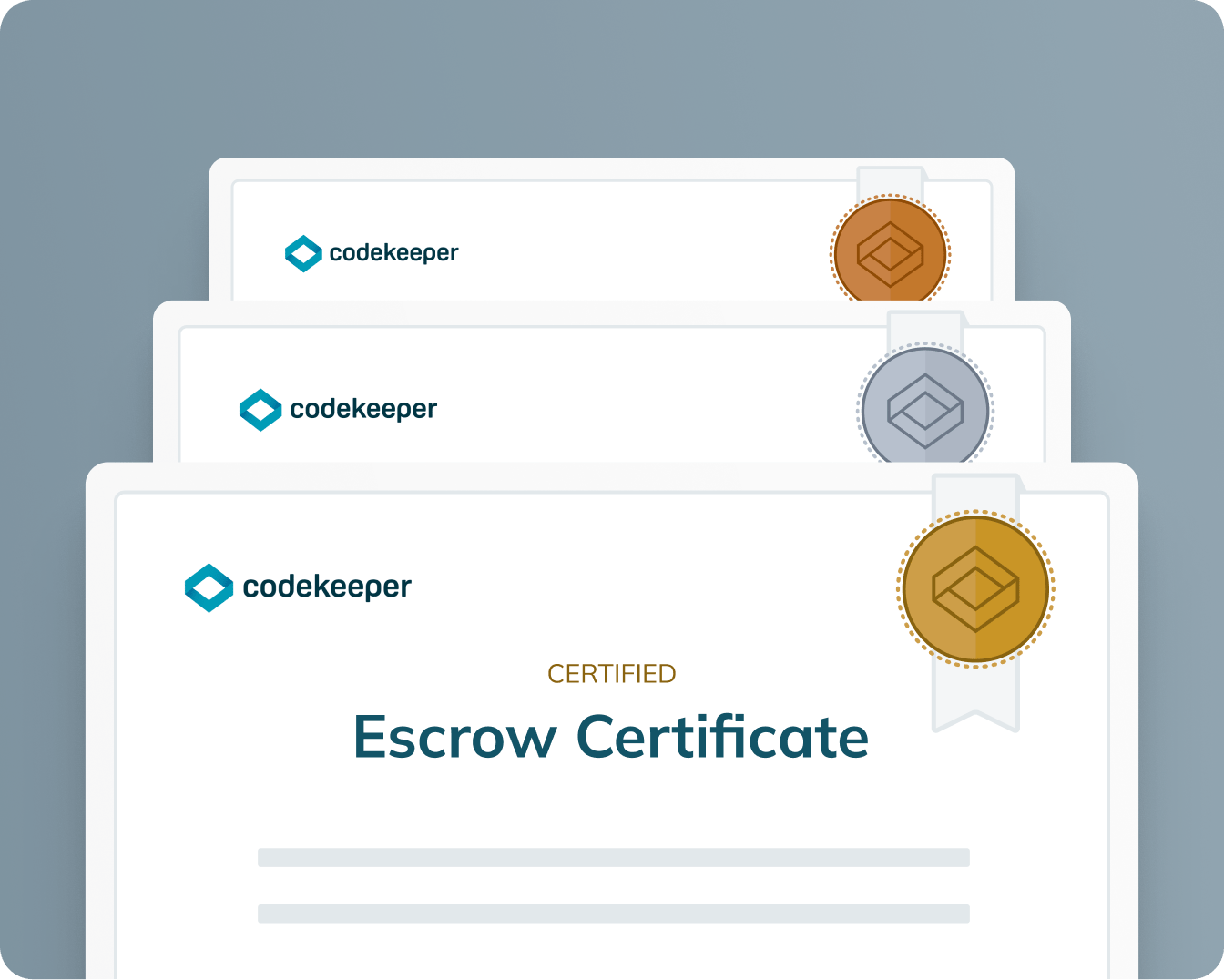
Receive your Resilience Certificate
Proof for regulators that your critical software is compliant.
Codekeeper takes the complexity out of compliance
Escrow in FFIEC focus
-
July 19, 2021
Proposed interagency guidance published: Federal Reserve, FDIC, and OCC outline enhanced third-party risk management expectations, including software access/recovery, third-party oversight, and continuity planning. -
June 7, 2023
Final interagency guidance issued by FDIC, OCC & Federal Reserve: Institutions must establish clear oversight of escrow arrangements, including annual validation, updates, and recovery provisions -
From 2023 onwards
Compliance expectations in force: Examiners now expect institutions to have robust software escrow programs, verification, and continuity measures in place to meet FFIEC resilience standards.
July 19, 2021
June 7, 2023
From 2023 onwards
What's at risk if you're not FFIEC compliant
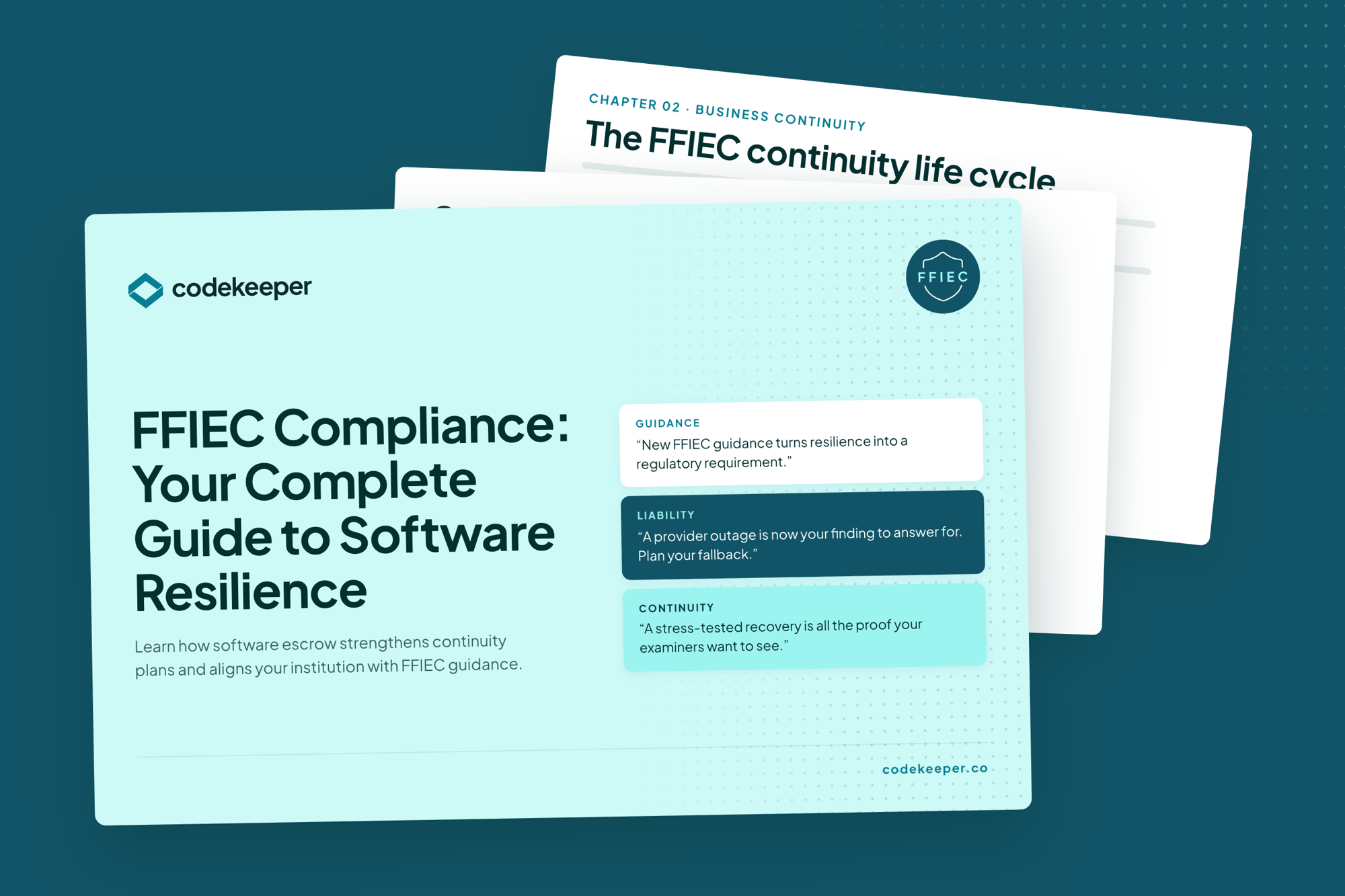
FFIEC Compliance: Your Complete Continuity & Risk Management Guide
How you benefit from FFIEC compliance
Maintain operational continuity
Build examiner and stakeholder trust
Strengthen board-level governance
Prove you’re FFIEC compliant — before the next audit
Good questions to ask first.
What is the FFIEC?
The FFIEC is a US government body that develops uniform standards for supervising financial institutions.
Who must comply with FFIEC guidelines?
US banks, credit unions, savings associations, and fintech providers serving them must adhere to FFIEC standards.
What is the purpose of FFIEC regulations?
The FFIEC aims to ensure institutions operate securely, manage risk, and remain resilient during disruptions, especially involving vendors.
Why is software escrow important for FFIEC compliance?
Software escrow ensures you retain access to business-critical systems if a vendor fails, supporting the FFIEC’s continuity and risk standards.
Does the FFIEC require escrow?
While not named directly, escrow helps meet FFIEC expectations around continuity, vendor control, and recovery planning.
What happens if we don’t comply?
You could face audit findings, enforcement actions, operational downtime, and reputational risk.
When should escrow be implemented?
Before vendor issues or examiner inquiries arise. It's a proactive risk mitigation strategy.
Can Codekeeper help?
Yes. We offer escrow solutions tailored to FFIEC mandates and have helped thousands of institutions stay compliant.