Eliminate software risk across your financial market infrastructures
EU regulators now have clear guidance on when your external service and software relationships create regulatory red flags. Firms that can't demonstrate sufficient operational control face increased scrutiny and roadblocks to future growth.
ESMA: What you need to know
What is ESMA?
Who needs to comply with ESMA’s guidelines?
Key ESMA principles
The software escrow — ESMA connection
Let us help you align with ESMA's third-party risk guidelines
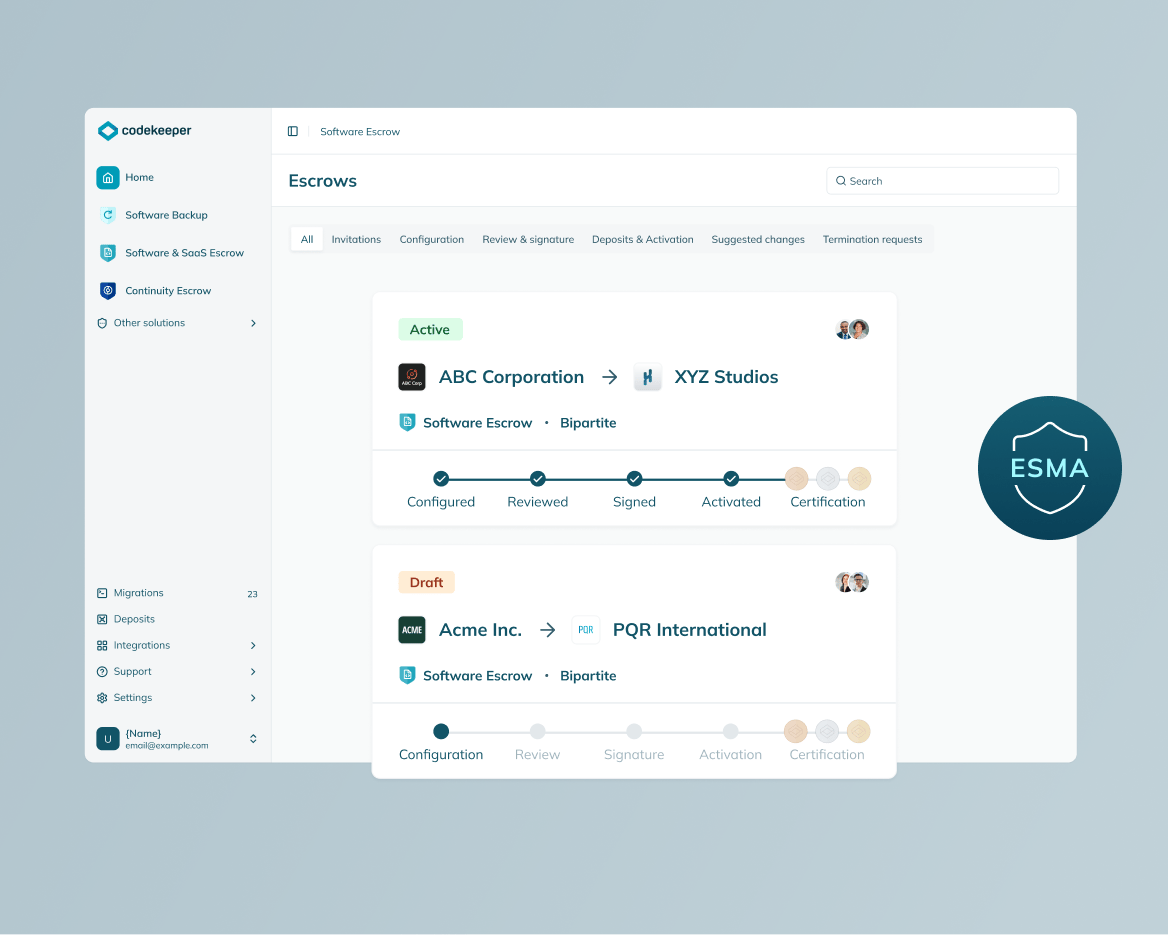
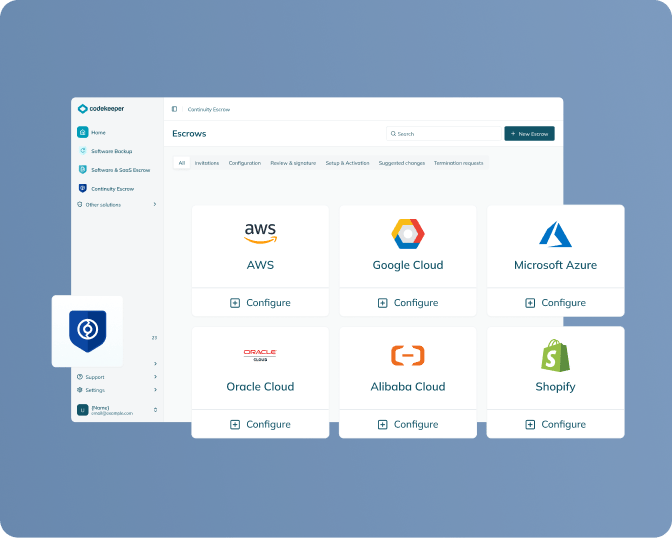
Codekeeper's complete solutions for ESMA software risk supervision
Protection scope: On-premises financial software
Protection scope: Cloud-based financial applications
Protection scope: Supporting services and infrastructure
Protection scope: All escrowed materials
Align with ESMA's third-party risk expectations in 4 simple steps
Book your ESMA readiness assessment
We'll evaluate your software dependencies and identify which arrangements need stronger exit strategies for regulatory review.
Select your software protection approach
Choose from Software Escrow, SaaS Escrow, or Continuity Escrow based on your technology architecture and critical vendor relationships.
We handle vendor coordination and legal setup
Our team manages all vendor onboarding, drafts escrow agreements, and establishes automated deposit processes without disrupting your operations.
Receive your compliance documentation
Get verification reports and Software Resilience Certificates that demonstrate concrete exit capabilities and effective third-party risk management to supervisors.
Codekeeper takes the complexity out of software risk management
ESMA third-party risk supervision timeline
-
June 12, 2025
ESMA principles published — Guidance issued to promote supervisory convergence across EU member states -
2025 onwards
Enhanced supervisory scrutiny during authorization reviews, ongoing supervision, and material change assessments
June 12, 2025
2025 onwards
The dangers of insufficient third-party oversight
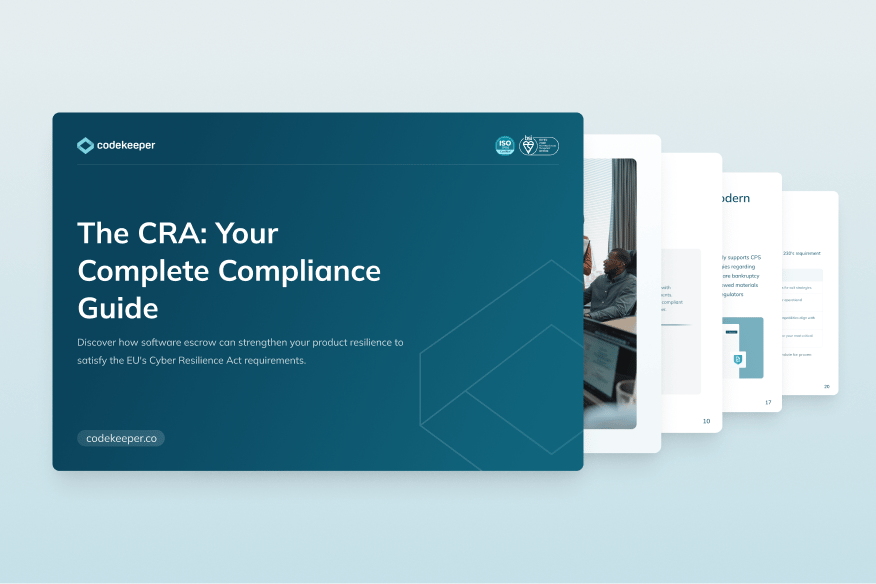
The CRA: Your Complete Compliance Guide
How you can benefit from strong software risk management
Better operational resilience
Competitive market advantage
Lower compliance costs
Stronger board confidence
Don't let vendor dependencies put your authorization at risk
Good questions to ask first.
What is the ESMA regulation?
ESMA's Principles on Third-Party Risks Supervision are non-binding guidance issued in June 2025 by the European Securities and Markets Authority. These principles help EU regulators supervise how securities firms manage their outsourcing and vendor relationships, with the goal of preventing firms from becoming "empty shells" that lack sufficient operational control.
Is ESMA mandatory?
ESMA’s principles themselves are non-binding guidance, not legal requirements. However, regulators use them to interpret existing mandatory EU securities laws like MiFID II, EMIR, and UCITS. Firms that align with ESMA's expectations typically face smoother regulatory interactions and fewer supervisory challenges.
What is an "empty shell" entity?
An "empty shell" (also called "letter box entity") is a firm that has outsourced so many critical functions that it lacks sufficient staff, technical capabilities, or operational control to function independently. ESMA is concerned about these entities because they're difficult to supervise effectively and may not be able to comply with regulations without their third-party providers.
How are ESMA and DORA linked?
ESMA and DORA both address third-party risks but focus on different aspects. DORA specifically covers ICT (information and communication technology) services like cloud hosting, cybersecurity tools, and data centers. ESMA's principles cover all other third-party arrangements in securities markets, including business software, operational services, and vendor relationships. Some software systems may need to comply with both frameworks — the ICT infrastructure requirements under DORA and the business relationship and exit strategy requirements under ESMA's principles.
Why is software escrow relevant to ESMA?
ESMA requires firms to have concrete exit strategies for vendor relationships and maintain operational independence. Software escrow provides this by storing source code and technical documentation so you can continue operations if software vendors fail or terminate contracts. This demonstrates the operational resilience ESMA supervisors expect.
Can Codekeeper help with ESMA readiness?
Yes, Codekeeper’s software escrow solutions create the documented exit strategies ESMA requires. We secure your critical software assets — source code, technical specifications, and recovery materials — and provide concrete evidence to supervisors that you maintain operational independence from vendors.